569 YOUTH-LED PROJECTS ADVANCING SUSTAINABLE DEVELOPMENT SELECTED FROM THE YOUTH EMPOWERMENT FUND 2025 OPEN CALL
23 January 2026
Estimated to reach over 1.2 million people in local communities, 569 diverse, sustainable, and impactful youth-led projects have been selected to receive capacity building, networking opportunities, and a collective total of €1.5 million in grants from the Youth Empowerment Fund (YEF) 2025 Open Call.
This milestone for the Youth Empowerment Fund – a partnership between the European Union (EU) and the Big Six Youth Organizations (Big Six) through the Global Youth Mobilization (GYM), builds on the success of 1,014 ongoing youth-led projects supported by the YEF since 2024.
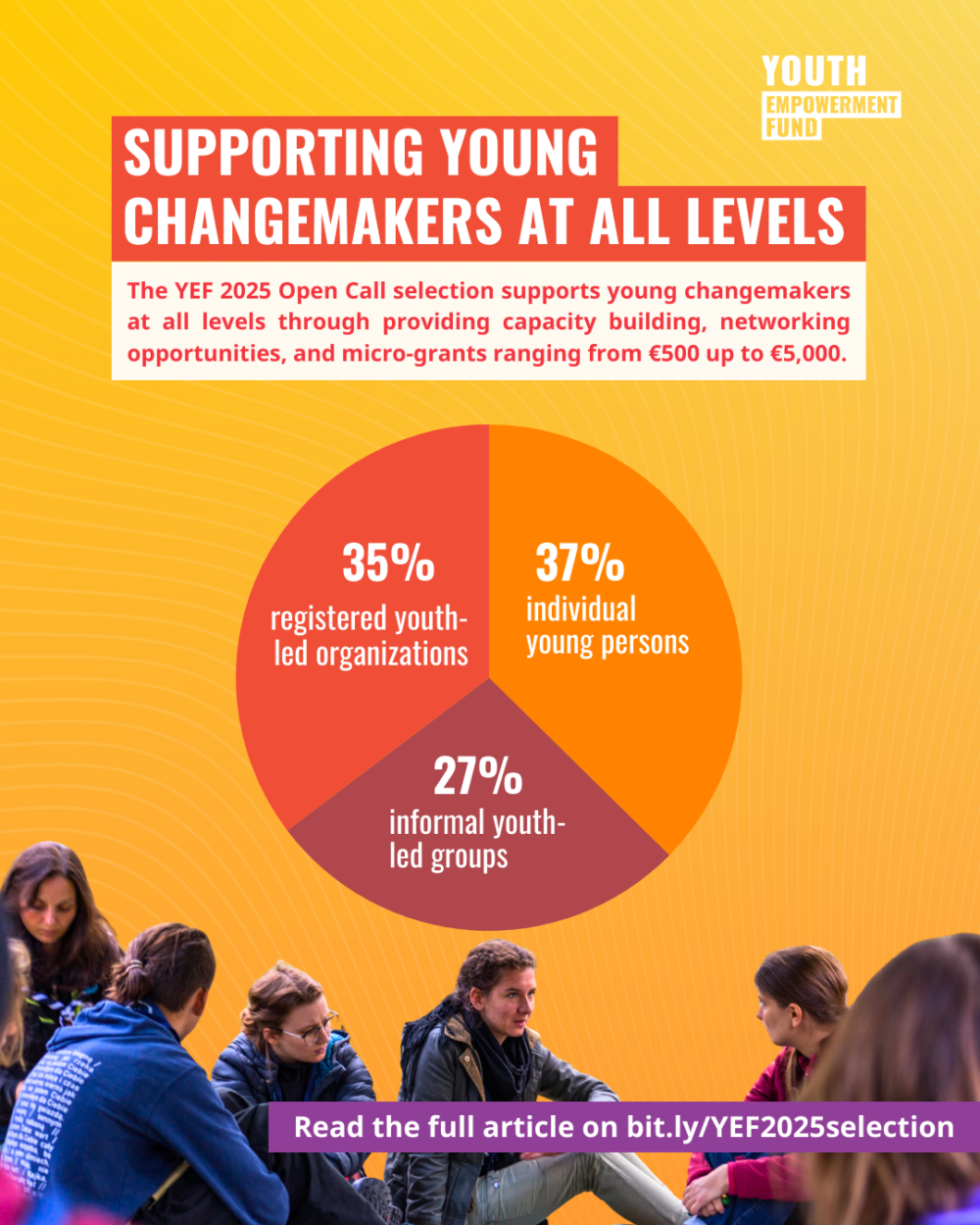
SUPPORTING YOUNG CHANGEMAKERS AT ALL LEVELS
Through the YEF open call cycle in 2025, selected individuals and informal groups will receive micro-grants ranging between €500 and €1,500, while selected registered youth-led organizations will receive up to €5,000 in funding to scale their impact.
Here’s the breakdown of selected projects at each level:
- Individual young persons: 37% of youth-led projects
- Informal youth-led groups: 27% of youth-led projects
- Registered youth-led organisations: 35% of youth-led projects
YOUTH-LED PROJECTS ADVANCING THE UN SDGS
Each selected initiative from the YEF 2025 Open Call selection addresses a multitude of the 17 United Nations (UN) Sustainable Development Goals (SDGs), with many focusing on key areas such as Goal 13: Climate Action, Goal 3: Good Health and Well-being, and Goal 4: Quality Education.
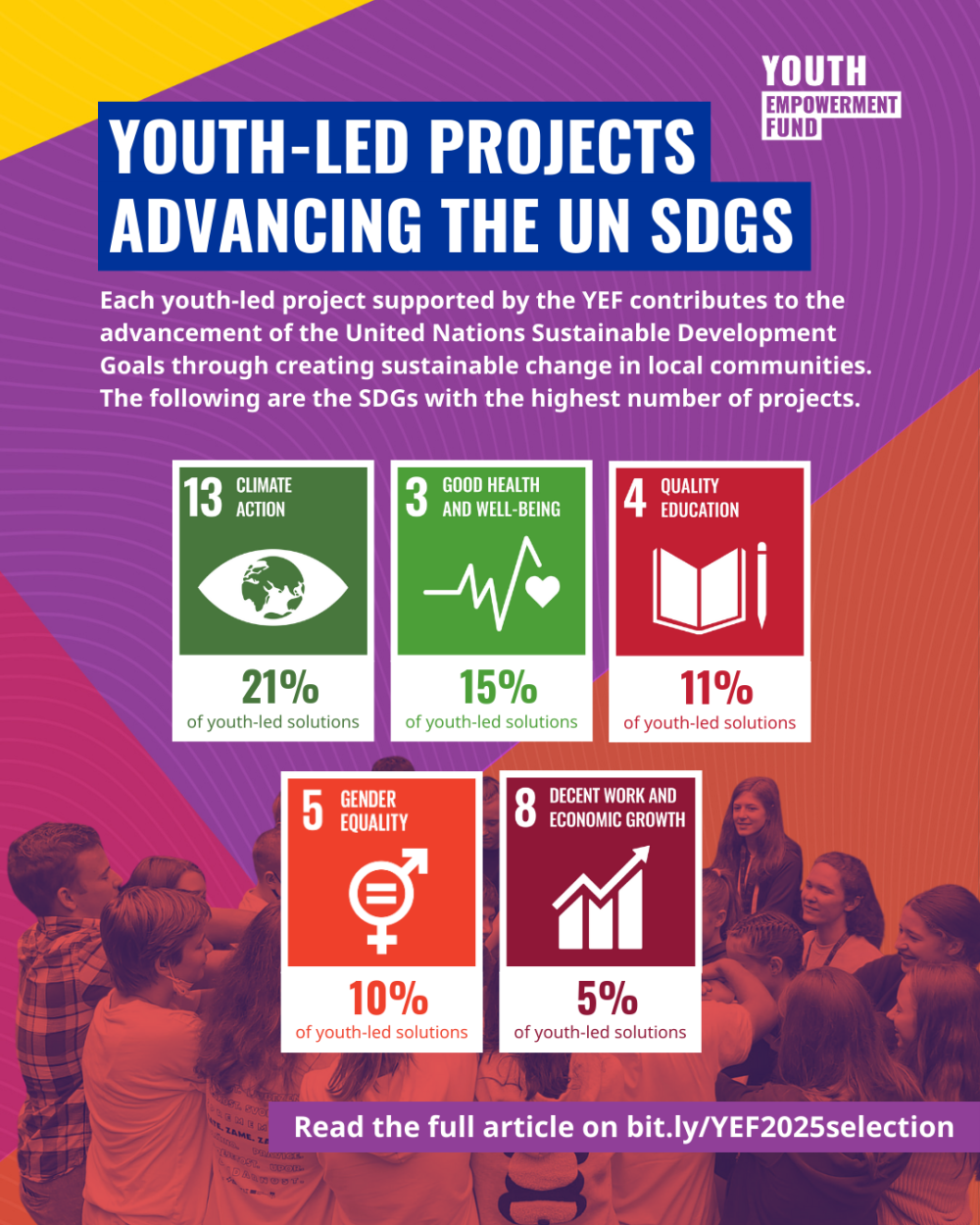
The diversity and creativity of these projects reflect the continued commitment of young changemakers to tackling local and global challenges with determination, creativity, and innovation. Among the YEF 2025 Open Call selection, these sustainable development goals had the highest number of selected youth-led projects:
- Goal 13 – Climate Action: 119 youth-led projects (21%)
- Goal 3 – Good Health and Well-being: 86 youth-led projects (15%)
- Goal 4 – Quality Education: 65 youth-led projects (11%)
- Goal 5 – Gender Equality: 59 youth-led projects (10%)
- Goal 8 – Decent Work and Economic Growth: 31 youth-led projects (5%)
EMPOWERING YOUNG DECISIONMAKERS AT EVERY LEVEL
Sifting through thousands of applications received worldwide, the selection was finalized after a thorough 5-month review process led by 154 Youth Panellists, 17 Senior Youth Panellists and 6 Youth Board Representatives worldwide. Together, they dedicated 3,400+ of volunteer hours to ensure a fair, inclusive, and representative review process for this second cycle.
Additionally, all young volunteer-leaders who spearheaded the application review process received hands-on learning, decision-making experience, and capacity building opportunities, developing skills such as building consensus, managing conflict, and financial oversight.
In addition to funding, the GYM’s Youth-Led Model in action, reflects the EU and Big Six collective mission to provide young people with safe spaces, training, and resources required to drive meaningful and sustainable change in their local communities.
“The most valuable aspect was the practical, hands-on skill development. Moving from theoretical knowledge to actually assessing real budgets, project timelines, and impact metrics gave me a concrete understanding of what makes a social initiative successful. This wasn’t a simulation; it was real decision-making with tangible outcomes, which is an unparalleled learning experience for a young person.
Bringing panelists together to debate scores ensured a much deeper and more equitable review of each application. This is a practice I would strongly recommend for my own organization to reduce individual bias and build consensus.”
Indra Bahadur Chuwan, 23, Bhutan
Youth Panellist“The most valuable aspect was getting to meet other like-minded changemakers from around the globe with some hopefully becoming friends. The youth panel meetings were particularly interesting and a reminder that no matter how young we are or how apart from each other we may be, our small actions can help to make lasting impacts in the lives of others in our societies.”
Kate Elodie Volbert, 21, Mauritius
Youth Panellist
DIVERSITY AND INCLUSIVITY: EMPOWERING UNDER-REPRESENTED COMMUNITIES
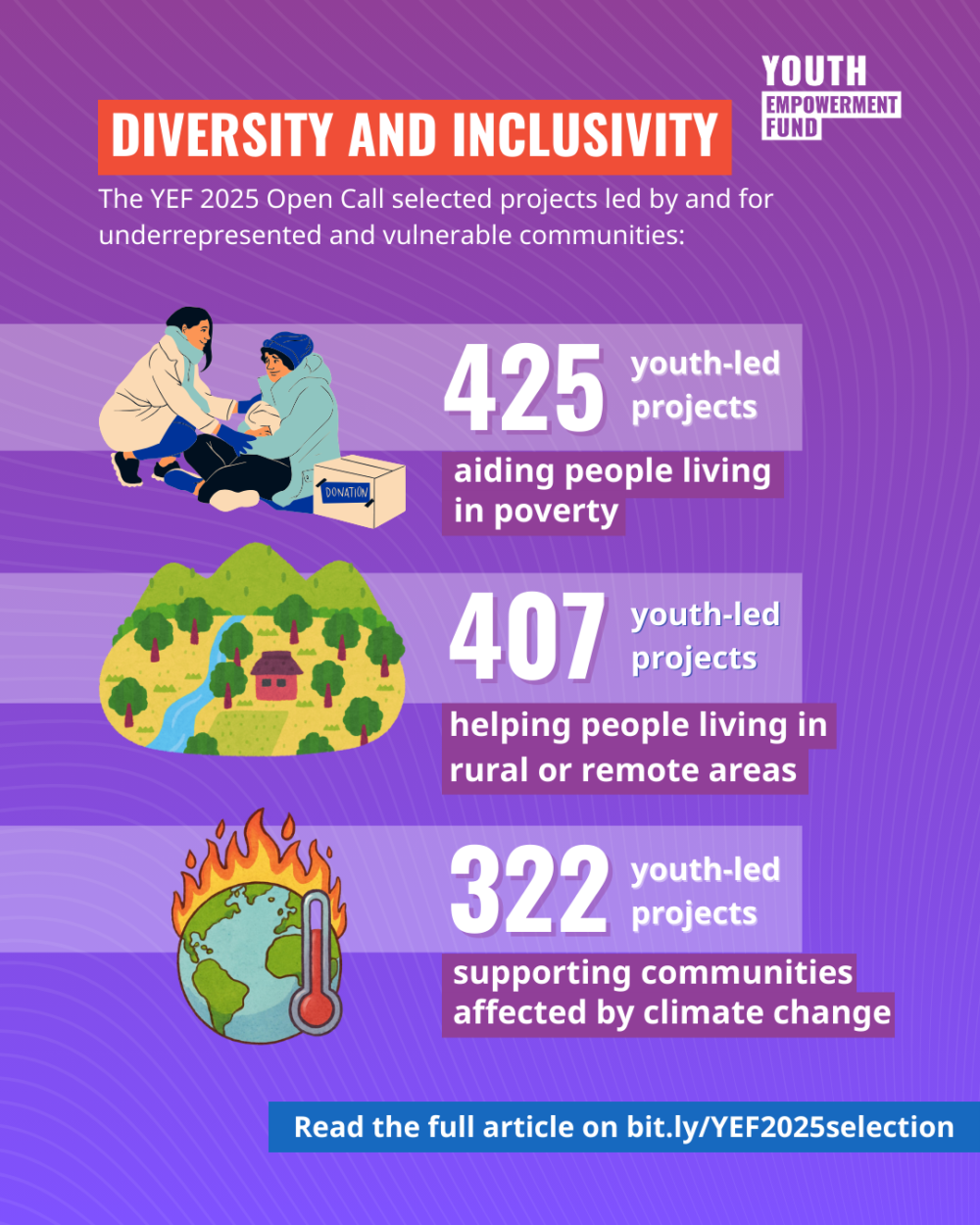
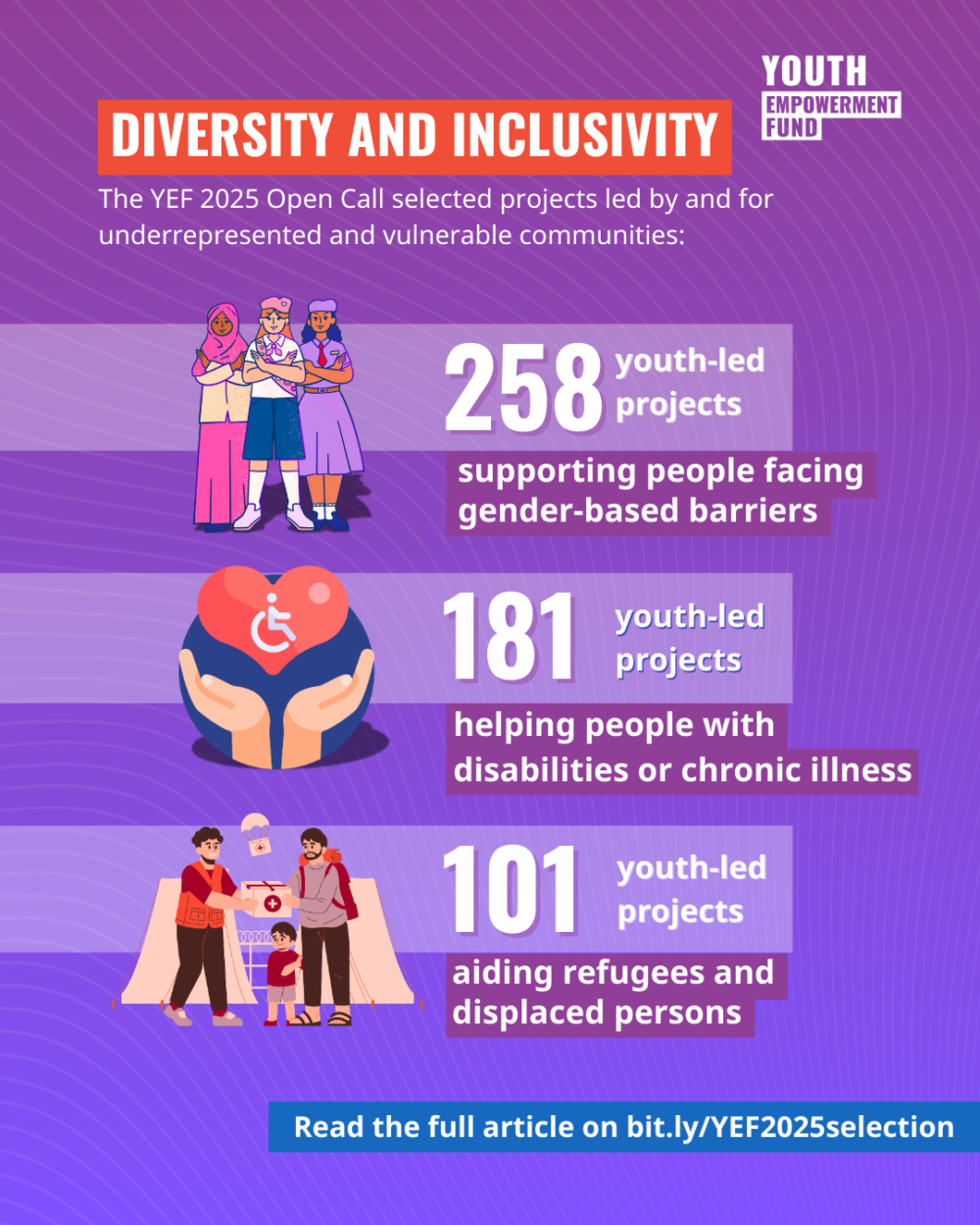
A core focus of the Youth Empowerment Fund remains its commitment to supporting youth-led initiatives that empower under-represented and vulnerable communities – including those affected by climate change, people with disabilities or chronic illness, and individuals facing gender-based or social barriers.
By enabling young people in addressing these critical issues, YEF continues to foster lasting, inclusive, and positive change where it’s needed most. Here is a glimpse of underrepresented communities which will receive support from selected YEF 2025 Open Call projects:
- People living in poverty: 425 youth-led projects
- People living in rural or remote areas: 407 youth-led projects
- Communities affected by climate change: 322 youth-led projects
- People facing gender-based barriers: 258 youth-led projects
- People with disabilities or chronic illness: 181 youth-led projects
- Refugees and displaced persons: 101 youth-led projects
As these initiatives come to life, the communities globally can look forward to continued transformation through the stewardship of young people — proving once again that youth are not just the leaders of tomorrow, but the changemakers of today.
A SNAPSHOT OF SELECTED PROJECTS FROM THE YOUTH EMPOWERMENT FUND’S 2025 OPEN CALL
Water Resilience in Huarmipuquio
Level of Funding: Level 4 (Organisation)
Location: Peru
Main SDG Addressed: 13 – Climate Action
Number of Beneficiaries: ~200 people
Project Overview:
The Water Resilience in Huarmipuquio project introduces a socio-ecological management model to strengthen water resilience, productive sustainability, and environmental stewardship in a region facing water scarcity, pasture degradation, biodiversity loss, and limited decision-making tools.
Through community water monitoring, local members will be trained to use accessible technology, install monitoring stations, and create an early warning system for water availability. The project will also develop climate-adapted silvopastoral systems, establish demonstration plots, and improve soil health, pasture quality, and livestock productivity.
To support informed territorial planning, digital governance tools and a georeferenced information platform will be introduced, paired with workshops that integrate local knowledge into decision-making. In addition, native tree planting will protect springs, restore micro-watersheds, and enhance biodiversity, while ongoing outreach and community events ensure participation and knowledge sharing. Overall, the project will improve water security, restore ecosystems, strengthen governance, and empower the community.
Bridging the Digital Divide: Empowering Deaf Students
Level of Funding: Level 2 (Individual)
Location: Kenya
Main SDG Addressed: 4 – Quality Education
Number of Beneficiaries: ~35 people
Project Overview:
Bridging the Digital Divide: Empowering Deaf Students aims to address the lack of digital tools and literacy resources at the deaf school, a remote rural area where deaf youth face significant educational barriers. This gap limits their access to essential digital skills and widens existing inequalities.
The project will establish a computer lab with adaptive software, develop a three-month digital literacy curriculum tailored to Kenya Sign Language (KSL), and train teachers to ensure long-term sustainability. A pilot program for 30 deaf students will provide hands-on learning opportunities, allowing them to access online educational platforms and communication tools.
This initiative will improve digital literacy, expand future opportunities for deaf youth, foster inclusion, and build confidence within a marginalized community. By enhancing access to technology, Bridging the Digital Divide: Empowering Deaf Students in Isiolo will help ensure equal and meaningful educational opportunities for deaf learners in the region.
Breaking the Cycle: Championing Collective Action for PCOS
Level of Funding: Level 2 (Group)
Location: Pakistan
Main SDG Addressed: 3 – Good Health and Well-being
Number of Beneficiaries: ~1,000 people
Project Overview:
Breaking the Cycle: Championing Collective Action for Polycystic Ovary Syndrome (PCOS) aims to address the high prevalence of PCOS in Pakistan, where 52% of women -especially those aged 15–19- are affected. Stigma, limited awareness, and lack of early diagnosis leave many young women without support for their physical and mental health.
The project will empower 200 university students across Karachi and Lahore through awareness sessions led by gynecologists, dietitians, and mental health counselors, along with subsidized screenings for early detection. A youth ambassador program will promote peer-led learning, supported by toolkits, posters, and self-assessment resources.
To broaden outreach, a nationwide PCOS Awareness Art Contest and a digital campaign featuring infographics, webinars, and an animated video will challenge stigma and make information more accessible. Overall, Breaking the Cycle will improve PCOS awareness, encourage early care, promote mental well-being, and build a supportive community led by young women.
“PodSustentar?” Podcast and ECOA – Multiplier Leadership Training Program
Level of Funding: Level 2 (Group)
Location: Brazil
Main SDG Addressed: 13 – Climate Action
Number of Beneficiaries: ~200 people
Project Overview:
The “PodSustentar?” Podcast and ECOA – Multiplier Leadership Training Program combines youth leadership training with community-driven climate action to address environmental sustainability and social equity in Brazil.
Many young people lack access to climate education and leadership opportunities, limiting their ability to create local change. Through the ECOA Leadership Program, 60 youth will participate in a two-month training with weekly classes and workshops, gaining skills in sustainability, advocacy, and community mobilization. Each participant will implements a local project, generating real impact.
The “PodSustentar?” Podcast will complement this by releasing episodes with experts, activists, and youth leaders, spreading climate knowledge and amplifying ECOA participants’ stories to inspire wider engagement. The project will strengthen youth leadership, promote environmental awareness, and support community-based climate solutions with lasting impact.
We Are Building
Level of Funding: Level 2 (Individual)
Location: Malawi
Main SDG Addressed: 8 – Decent Work and Economic Growth
Number of Beneficiaries: ~15 people
Project Overview:
We Are Building addresses the lack of economic opportunities facing young girls in a district in Malawi where limited access to education and high unemployment contribute to early marriages, teenage pregnancies, and economic dependence. The project focuses on equipping young girls with practical, marketable skills to support economic independence and self-reliance, reducing risk of Gender Based Violence (GBV).
The project will provide hands-on tailoring training, supported by experienced trainers, alongside business management and financial literacy sessions covering collective selling, marketing, and customer service. Community engagement meetings will involve local leaders, youth networks, and schools to support participant selection and community ownership.
To strengthen sustainability, the initiative will establish a shared entrepreneurship hub, promote savings through Village Savings and Loans groups, and engage private sector and microfinance actors to support future market access. Overall, We Are Building aims to reduce economic vulnerability, empower young girls, and contribute to community development through youth-led, skills-based livelihoods.
Girls Hack for Impact
Level of Funding: Level 2 (group)
Location: Rwanda
Main SDG Addressed: 5 – Gender Equality
Number of Beneficiaries: ~50 people
Project Overview:
Girls Hack for Impact aims to help close the gender gap in STEAM education in Rwanda, where cultural norms and stereotypes limit girls’ access to digital skills and innovation opportunities. With only 32% of female students pursuing STEAM fields – and 17% expressing apathy – the project provides a hands-on learning platform to empower 50 girls with essential digital skills, leadership capacity, and the ability to design tech solutions for their communities.
Through a five-month hybrid program combining training, mentorship, and a two-day hackathon, participants will gain practical experience in digital literacy, design thinking, coding, and presentation skills. They will develop community-based solutions addressing gender inequality, education, and climate challenges, culminating in a Demo Day where the top teams receive prizes and continued mentorship.
Girls Hack for Impact will build confidence, increase employability, and strengthen leadership potential among young girls. Participants will become role models and changemakers, inspiring more girls to pursue STEAM careers. Insights from this pilot will guide future expansion to Kenya and Nigeria, amplifying regional impact and fostering a more inclusive tech ecosystem.
Lorem ipsum dolor sit amet, consectetur adipiscing elit. Ut elit tellus, luctus nec ullamcorper mattis, pulvinar dapibus leo.
Lorem ipsum dolor sit amet, consectetur adipiscing elit. Ut elit tellus, luctus nec ullamcorper mattis, pulvinar dapibus leo.
BACKGROUND
The Youth Empowerment Fund (YEF) is a partnership between the European Union (EU) and the Big Six Youth Organisations (Big Six). Delivered through the Global Youth Mobilization (GYM), the €10 million Youth Empowerment Fund provides resources for young people globally to advance the objectives of Agenda 2030 in line with the EU’s Global Gateway strategy. With a focus on creating accessible opportunities for young people, including those from marginalized and under-represented groups, it aims to reduce traditional funding barriers young people face and provide capacity building support to enable young people to make a real impact in their local communities.
The European Union’s initiatives for and with youth globally are directed by the Youth Action Plan (YAP) in EU External Action for 2022-2027. This plan, the first-ever policy framework of its kind, establishes a strategic partnership with young people worldwide. It highlights the importance of youth as catalysts for change and essential partners in realising the 2030 Agenda for Sustainable Development and other international commitments such as the Paris Agreement on climate change. The YAP aims to ensure that the EU external action contributes to youth empowerment at political, social and economic levels, and to facilitate young people’s meaningful engagement in decision and policy-making. The Youth Empowerment Fund is a flagship initiative of the Youth Action Plan designed by, with and for young people.
The Global Youth Mobilization (GYM) – launched by the Big Six in 2020, invested over US$ 5 million in 640 youth-led projects, engaging more than 600,000 young people and impacting over 3.6 million people in more than 125 countries between 2020 and 2022. Through the funding of the Youth Empowerment Fund, the GYM will continue to support young people globally. The Big Six Youth Organizations, formed in 1996, is an alliance of leading international youth-serving organisations. The alliance includes the World Organization of the Scout Movement (WOSM), the World Alliance of Young Men’s Christian Associations (World YMCA), the World Alliance of Young Women’s Christian Associations (World YWCA), the World Association of Girl Guides and Girl Scouts (WAGGGS), the International Federation of Red Cross and Red Crescent Societies (IFRC), and The Duke of Edinburgh’s International Award (The Award). Collectively, the Big Six engage over 250 million young people, contributing to the empowerment of more than one billion young individuals over the last Century.